
August: More Than a Summer Month
August is no longer just part of the summer calendar; it has become a period where seasonal activities intersect with the momentum of Saudi sports in a distinct and structured way.
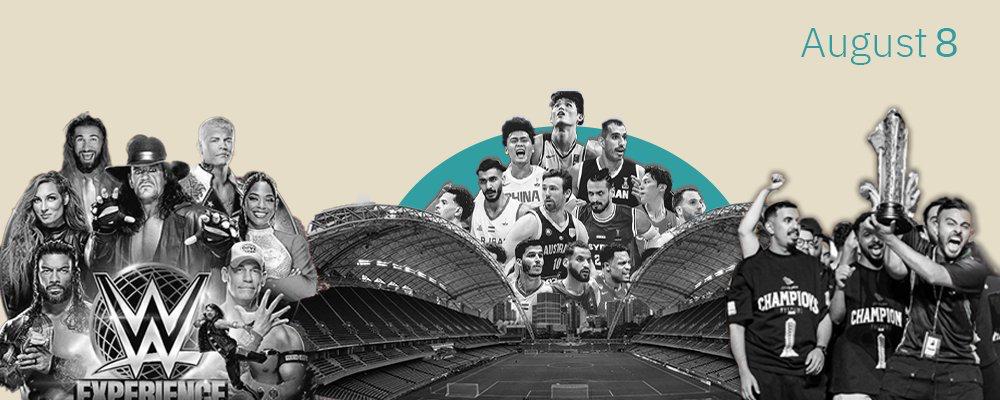
Within a single month, multiple major events converge: the Saudi Pro League, the Saudi Super Cup hosted in Hong Kong, international boxing events in Riyadh, the FIBA Asia Cup in Jeddah, and the Esports World Cup in Riyadh.
This concentration creates a dense, high-frequency sports experience—effectively a compressed model of a full sporting year—where audiences remain engaged across multiple disciplines, even beyond the traditional football season.
How Did This Shift Occur?
This level of activity is not incidental. It is the result of structured national planning, where sports have been repositioned as an economic sector, a cultural pillar, and a component of public health strategy. Sustained investment in infrastructure and institutional support has enabled the Kingdom to transition from passive consumption to active hosting and participation in global sports ecosystems.
It is now standard for a single month to include multiple tournaments across different sports—an outcome of deliberate capacity building and long-term vision.

From a Single Sport Focus to a Multi-Sport Culture
Audience behavior has also evolved. The sports community is no longer centered on a single discipline; it has diversified significantly. There is growing engagement across boxing, basketball, motorsports, and esports, accompanied by the emergence of Saudi content creators and athletes within these domains.
This diversification reflects a broader cultural shift, where sports are no longer segmented but integrated into a wider entertainment and lifestyle framework.
Sports as a Lifestyle
Sports in Saudi Arabia have moved beyond organized competition to become embedded in daily life. They now influence both entertainment patterns and health awareness, with increasing integration into education systems and household routines.
The presence of sports is no longer episodic—it is structural, shaping behavioral norms across both family and institutional environments.
A Sports Economy Beyond the Field
The expansion of sports has also generated measurable economic impact. Major tournaments, strategic sponsorships, specialized media production, and talent development pipelines now operate as interconnected components of a broader sports economy.
This ecosystem extends beyond venues, contributing to job creation, industry diversification, and long-term economic growth.
August as a Strategic Indicator
August serves as a clear indicator of this transformation. It reflects how sports in Saudi Arabia have evolved into a dynamic national project—driven by citizens, structured by policy, and observed globally with increasing attention.
What was once seasonal activity is now a sustained, multi-dimensional system operating at scale.
